Managing financial operations in modern businesses requires accuracy, speed, and compliance. Traditional methods of handling accounting, reporting, and risk management can be slow and error-prone. ERP for finance provides an integrated solution that streamlines financial reporting and strengthens risk management. By automating processes, improving data visibility, and reducing manual errors, finance teams can make informed decisions and maintain compliance with ease. In this blog, we will explore how ERP solutions transform financial operations and risk management strategies.
Table of Contents
ToggleHow ERP for Finance Improves Financial Reporting
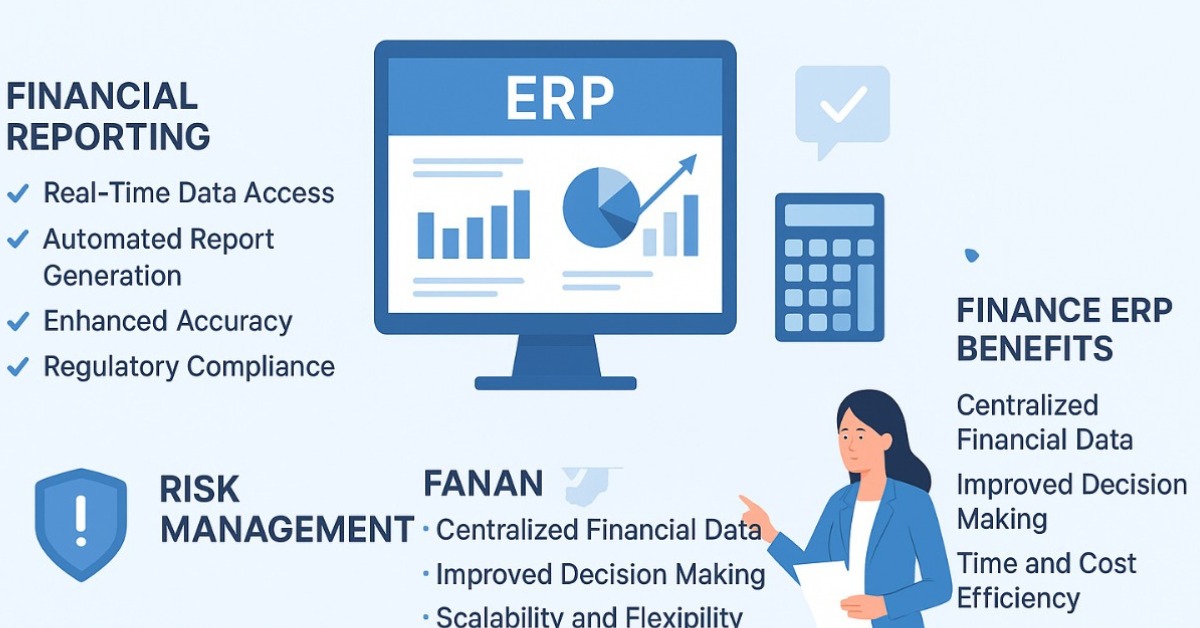
Financial reporting is a critical function for any organization. It ensures transparency, supports decision-making, and keeps the business compliant with regulatory standards. ERP for finance automates the generation of accurate reports, reduces manual errors, and provides real-time insights.
- Real-Time Data Access: ERP systems centralize all financial data, allowing teams to access up-to-date information instantly. This eliminates delays caused by manual data compilation.
- Automated Report Generation: Finance ERP systems can automatically generate financial statements, balance sheets, and income statements, saving time and ensuring accuracy.
- Enhanced Accuracy: By reducing manual entries, ERP for finance minimizes human errors and ensures reliable reporting for stakeholders.
- Regulatory Compliance: ERP solutions integrate compliance features that follow regional accounting standards and reporting regulations, reducing risks of penalties.
Managing financial risk is crucial for business sustainability. ERP for finance provides tools to monitor, analyze, and mitigate potential risks effectively. These systems help in identifying financial anomalies, tracking cash flow, and maintaining internal controls.
- Real-Time Risk Monitoring: ERP systems provide dashboards that highlight financial risks such as liquidity issues or overdue receivables.
- Predictive Analytics: Finance ERP tools use historical data to forecast risks and support proactive decision-making.
- Audit Trail and Transparency: ERP maintains a complete audit trail of all financial transactions, ensuring accountability and easier audits.
- Internal Controls Automation: ERP solutions automate internal control processes such as approvals, reconciliations, and checks, reducing the risk of fraud or errors.

Benefits of Integrating ERP into Finance Operations
ERP for finance offers multiple advantages that enhance overall business performance.
- Centralized Financial Data: Centralized Financial Data ERP for finance consolidates all financial information into a single platform. This ensures consistency across departments, eliminates data duplication, and provides a reliable source of truth for decision-making. Teams can access accurate information instantly, improving coordination and reducing errors caused by manual handling.
- Improved Decision Making: Real-time insights from ERP systems enable finance teams and management to make informed strategic decisions. By monitoring cash flow, expenses, and revenue in real time, businesses can allocate resources effectively, forecast trends, and respond quickly to changing market conditions. Predictive analytics further supports planning and minimizes financial risks.
- Time and Cost Efficiency: Automation of repetitive tasks such as reconciliations, approvals, and financial reporting saves significant time and reduces operational costs. Finance teams can focus on strategic activities rather than manual processes. Additionally, automation reduces human errors, which enhances accuracy and prevents costly mistakes in financial operations.
- Scalability and Flexibility: ERP systems grow with the organization, supporting expansion and evolving business needs. They adapt to changing regulations, increasing transaction volumes, and complex reporting requirements. This flexibility ensures long-term efficiency and allows businesses to remain agile in dynamic financial environments
Key Features to Look for in a Finance ERP System
Selecting the right ERP solution is critical for maximizing its benefits. Some features to prioritize include:
- Integrated Financial Modules: Ensure the ERP system covers accounts payable, accounts receivable, general ledger, asset management, and budgeting.
- Customizable Reporting: Look for tools that allow customization of reports to meet specific business and regulatory requirements.
- Real-Time Dashboards: Dashboards with live metrics help monitor financial performance and risk indicators instantly.
- Audit and Compliance Tools: The system should support audit trails, compliance checks, and regulatory reporting to minimize legal and financial risks.
Conclusion
ERP for finance is no longer optional for businesses aiming to streamline financial reporting and manage risks effectively. With integrated systems, real-time data access, automated reporting, and robust risk management tools, finance teams can operate efficiently, reduce errors, and make informed decisions. Implementing the right ERP solution allows organizations to stay compliant, save costs, and improve overall financial performance. Investing in finance ERP is a strategic move to enhance business resilience and maintain a competitive edge in today’s fast-paced market.