
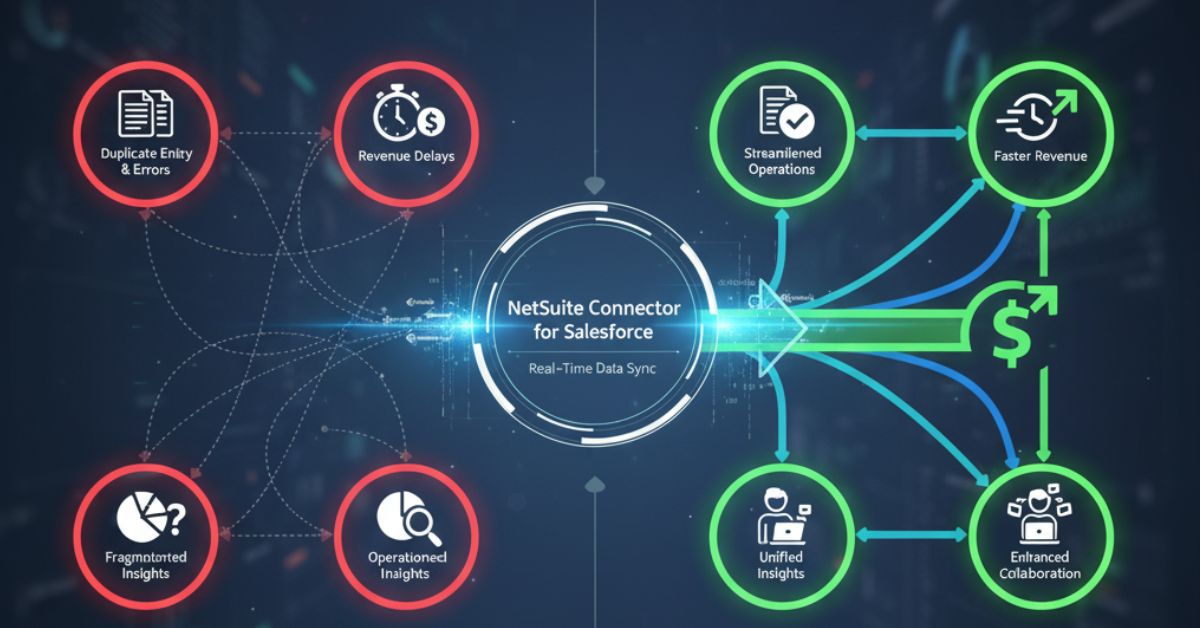
Disconnected systems are a common pain point for growing businesses. When your CRM and ERP are not synchronized, sales and finance teams often face duplicate data entry, inconsistent information, and delays in revenue recognition. For companies using Salesforce and NetSuite, manually reconciling these systems is both time-consuming and error-prone.
The NetSuite Connector for Salesforce bridges this gap. Powered by the NetSuite Integration Platform, it enables real-time syncing of opportunities, orders, financials, and customer data. This ensures that sales and finance teams are always working from the same accurate information.
On Wednesday, October 1, 2025, from 10:00–10:30 a.m. PDT, Oracle NetSuite will host a virtual event titled Connect Salesforce Data to NetSuite, highlighting how this pre-built connector transforms the order-to-cash process and supports operational efficiency.
Table of Contents
ToggleWhy Synchronizing CRM and ERP Systems is Critical
Disconnected systems create inefficiencies that ripple across the organization.
- Duplicate Entry and Errors: Manual data transfers often result in mistakes, requiring time-consuming corrections.
- Revenue Delays: Delays in order creation or syncing affect cash flow and reporting.
- Fragmented Insights: Without synchronized data, teams cannot make timely, informed decisions.
- Operational Inefficiency: Teams spend more time reconciling data than focusing on value-added tasks.
The NetSuite Connector for Salesforce addresses these issues by enabling seamless data flow between CRM and ERP, reducing operational bottlenecks.
Key Features of the NetSuite Connector for Salesforce
The connector is designed to simplify integration and improve productivity across departments.
- Streamline Operations: Automate data transfer to reduce manual effort and minimize errors.
- Eliminate Data Silos: Real-time syncing ensures sales and finance teams share consistent information.
- Recognize Revenue Faster: Instant order creation accelerates the order-to-cash cycle and cash flow.
- Simplify Setup and Monitoring: Native NetSuite integration provides dashboards and self-service monitoring for easy management.
By adopting this solution, businesses can ensure data accuracy, faster order processing, and enhanced collaboration between sales and finance.
How the Connector Supports Business Growth
The NetSuite Connector for Salesforce is more than an integration tool—it is a strategic enabler for scalable operations.
- Improved Efficiency: Reduces repetitive tasks, allowing teams to focus on strategic activities.
- Data Accuracy: Ensures consistent information across CRM and ERP systems, reducing risk of misreporting.
- Enhanced Collaboration: Real-time updates create alignment between departments for better decision-making.
- Faster Revenue Cycles: Streamlined order-to-cash processes increase operational agility and cash flow.
For businesses scaling rapidly, these improvements translate into measurable benefits, including reduced operational risk and better customer experiences.
Practical Use Cases
The connector proves its value in multiple real-world scenarios:
- Sales and Finance Alignment: Synchronizes opportunities, quotes, and orders, so finance teams can process transactions without waiting for manual input.
- High-Volume Order Processing: Ensures large volumes of orders are automatically reflected in NetSuite, supporting peak demand without bottlenecks.
- Revenue Recognition Compliance: Accurate and timely order syncing helps businesses comply with accounting standards and internal policies.
- Cross-Department Visibility: Sales, operations, and finance teams have instant access to shared data, improving collaboration and reducing miscommunication.
Each scenario highlights how the connector mitigates inefficiencies while supporting growth and scalability.
Why Attend the Webinar
This event is tailored for organizations using Salesforce and NetSuite who want to accelerate their order-to-cash processes and improve operational efficiency.
Attendees will:
- See how the NetSuite Connector for Salesforce enables real-time data syncing.
- Understand how to streamline operations and eliminate manual data entry errors.
- Learn how to accelerate revenue recognition with instant order creation.
- Explore dashboard tools for simplifying setup and monitoring of integrations.
The session provides actionable guidance that can be applied immediately to enhance business performance.
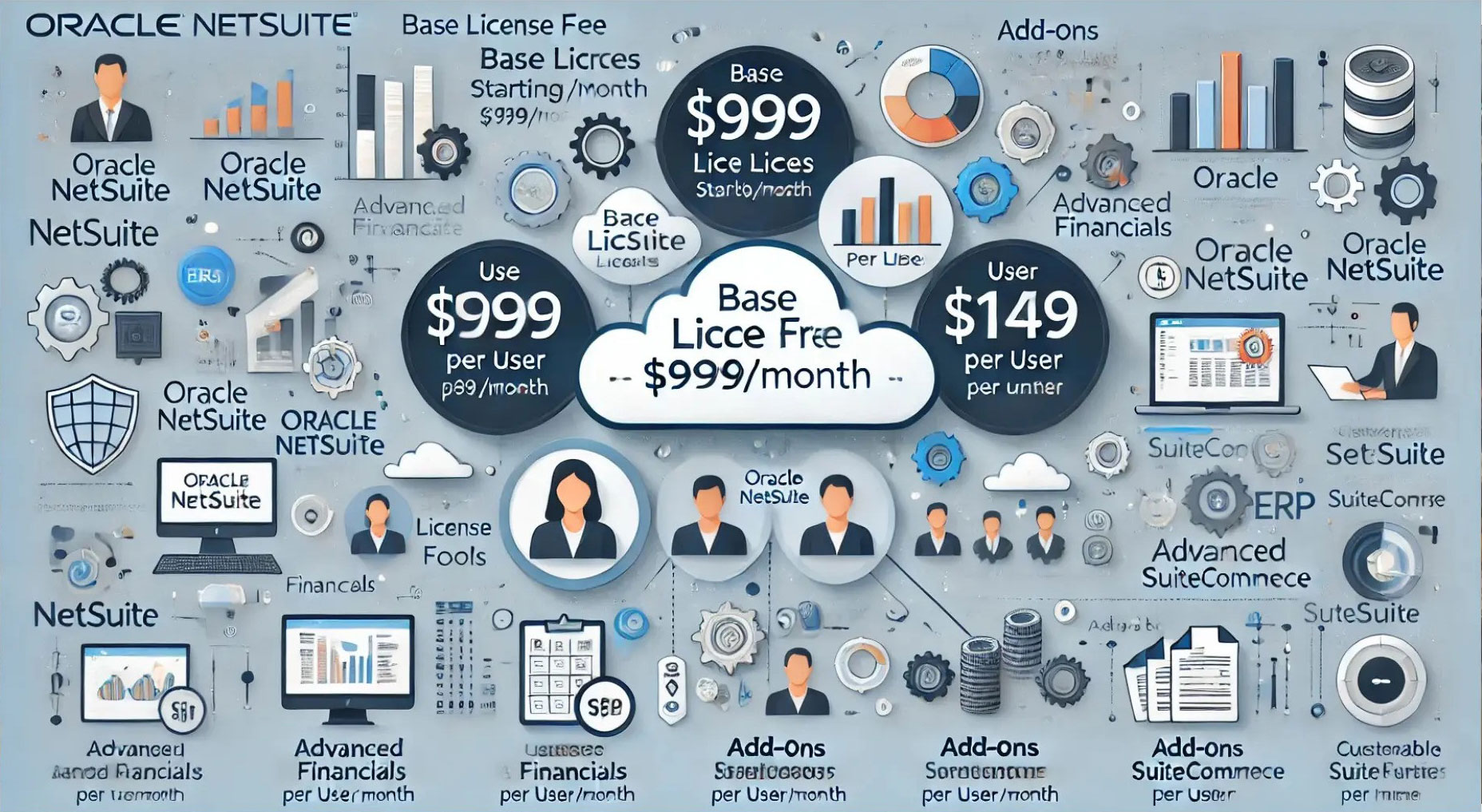
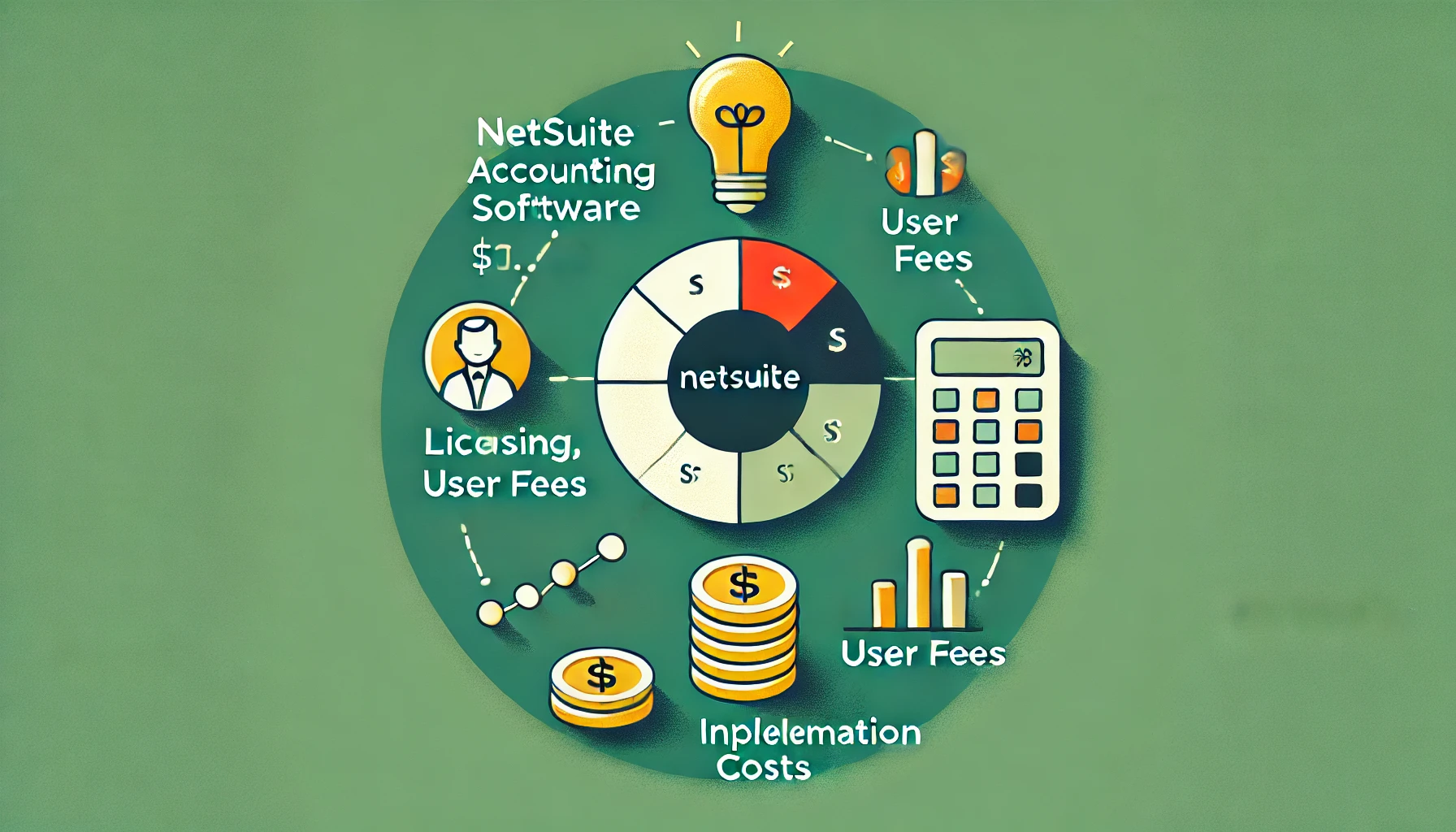
Factors Influencing Your NetSuite Subscription Cost
Here are some major elements that affect how much NetSuite will cost for your business:
- Business Size: SMBs may only need a few modules and users, while enterprises might require extensive customization.
- Industry Requirements: Industries like healthcare, finance, and manufacturing may need more compliance features or specialized modules.
- Geographical Presence: Multi-subsidiary or multinational businesses require additional modules like OneWorld for global operations.
- Customization Needs: The more workflows and reports you need customized, the higher the configuration cost.
- Integration Needs: Connecting NetSuite to other apps (e.g., Salesforce, Shopify, or HubSpot) may involve custom APIs or middleware, adding to the cost.
Featured Speakers
The webinar will feature leading experts in CRM-ERP integration and NetSuite solutions:
- Danielle Profita Briner
Product Marketing Director, Commerce and Connectors, Oracle NetSuite - Faybiana Walker-Cunningham
Staff Solution Consultant, Oracle NetSuite
They will provide both technical insights and practical use cases to demonstrate the value of the connector in real business contexts.
Strategic Benefits of Connecting Salesforce and NetSuite
Organizations that adopt the NetSuite Connector for Salesforce unlock multiple strategic advantages:
- Enhanced Productivity: Teams spend less time on manual data reconciliation.
- Scalability: As businesses grow, real-time syncing supports larger volumes of transactions and users.
- Improved Decision-Making: With synchronized data, leadership can make faster, data-driven decisions.
- Competitive Advantage: Reducing operational bottlenecks ensures smoother customer experiences and faster order fulfillment.
By integrating CRM and ERP, organizations future-proof their operations and position themselves for sustainable growth.
Preparing Your Organization for Integration
Before adopting the connector, businesses should assess:
- Current Workflow Gaps: Identify where manual entry or delays occur.
- Data Quality: Ensure existing Salesforce and NetSuite records are clean and accurate.
- User Access and Roles: Determine which teams need access to synchronized data.
- Monitoring and Governance: Plan dashboards and alerts to maintain integration health.
A well-prepared organization maximizes the benefits of NetSuite integration and ensures seamless adoption of the connector.
Conclusion
Disconnected systems can create significant operational challenges. The NetSuite Connector for Salesforce addresses these by synchronizing CRM and ERP data in real time, reducing errors, accelerating revenue recognition, and enhancing collaboration.
This webinar, Connect Salesforce Data to NetSuite, scheduled for Wednesday, October 1, 2025, from 10:00–10:30 a.m. PDT, will provide a detailed demonstration of the connector’s capabilities. Attendees will learn how to streamline operations, eliminate data silos, and scale their business efficiently.
By implementing the connector, organizations ensure data accuracy, faster order-to-cash processes, and a foundation for future growth. Don’t miss the chance to see how NetSuite integration can transform your CRM-ERP workflow and empower both sales and finance teams to perform at their best.