
Comprehensive Guide to ERP System Implementation
Embarking on the journey of ERP system implementation can be both thrilling and daunting for any organization. It’s like setting sail into uncharted waters with the promise of smoother operations, increased efficiency, and better decision-making on the horizon. In this blog, we’ll delve into the depths of ERP system implementation, exploring its phases, challenges, and the transformative impact it can have on businesses. Join me as we navigate through the intricacies of what is often considered a pivotal moment in an organization’s growth. Chapter 1: Setting Sail – Understanding ERP System Implementation Before we dive into the implementation process, let’s anchor ourselves in the basics. What exactly is an ERP system implementation, and why is it crucial for modern businesses? What is an ERP Implementation? ERP, or Enterprise Resource Planning, is a comprehensive software solution designed to streamline and integrate various business processes within an organization. An ERP system implementation involves deploying this software to manage day-to-day activities, automate back-office functions, and facilitate a seamless flow of information across departments. A CEO’s Perspective Picture this: You, as a CEO, stand at the helm of your ship, steering the company towards success. An ERP system is like having a high-tech navigation system, providing real-time data and insights to make informed decisions. This is not just about technology; it’s about transforming the way you lead your crew (employees) towards shared goals. Chapter 2: Plotting the Course – ERP Implementation Phases Now that we’ve set sail, let’s chart our course through the various ERP implementation phases. Like navigating through different waters, each phase presents its own challenges and opportunities. ERP Implementation Phases Demystified Assessment and Planning: Navigational Charts Before hoisting the sails, it’s crucial to assess the current state of your organization and chart a course for the future. Identify goals, set timelines, and assemble a dedicated team to steer the ship. Design: Crafting the Ship Just as a ship needs a well-thought-out design, your ERP system requires customization. Work closely with your chosen ERP provider to tailor the system to your specific needs. This is where the ship takes shape, ensuring it can weather any storm. Development: Building the Ship The shipbuilding process begins with the development phase. Custom coding, integration with existing systems, and rigorous testing ensure your ERP system is robust and ready for the high seas. Testing: Sea Trials Before the maiden voyage, conduct sea trials. Test the ERP system in a controlled environment to identify and resolve any issues. This phase ensures that your ship is seaworthy and can navigate the business seas effectively. Deployment: Launching the Ship With sea trials successfully completed, it’s time to launch your ship into the vast ocean. Deploy the ERP system across your organization, providing adequate training to your crew to ensure a smooth transition. Maintenance and Support: Navigating Storms Just as ships need regular maintenance, your ERP system requires ongoing support. Stay vigilant, address issues promptly, and keep your navigation tools up to date to navigate through any business storms. Personal Journey: A Project Manager’s Tale Meet Sarah, a seasoned project manager who steered her company through a successful ERP implementation. In the planning phase, she meticulously mapped out the project timeline, ensuring every team member knew their role. As the ship took shape during development, she facilitated open communication between departments, ensuring the ERP system met the unique needs of each team. During testing, Sarah faced challenges head-on, addressing issues promptly to ensure a smooth launch. Her commitment to ongoing maintenance and support ensured the ship sailed smoothly through changing tides. Chapter 3: Stormy Waters – Challenges in ERP Implementation No journey is without its challenges, and ERP system implementation is no exception. Let’s navigate through the stormy waters and explore common challenges organizations may face. Common Challenges in ERP Implementation Resistance to Change: Navigating Choppy Seas Crew members (employees) may resist the new system, fearing a disruption in their routines. Communication and training are key to overcoming this challenge and ensuring a smooth transition. Data Migration: Turbulent Waters Migrating existing data to the new ERP system can be complex and risky. A meticulous approach, thorough testing, and a contingency plan are essential to avoid data-related disasters. Customization Complexities: Uncharted Territories While customization is necessary, it can lead to complexities. Striking the right balance between tailoring the system to specific needs and maintaining simplicity is crucial. Integration Issues: Navigating Interconnected Seas Ensuring seamless integration with existing systems is a common challenge. Organizations must address compatibility issues and optimize connectivity to avoid disruptions. Inadequate Training: Navigational Tools Misuse Lack of proper training can lead to underutilization of the ERP system. Investing in comprehensive training programs ensures that every crew member knows how to leverage the system effectively. Personal Reflection: A Team Member’s Experience Consider Alex, a team member navigating the waters of change during ERP implementation. Initially resistant, Alex found comfort in a well-structured training program that not only addressed concerns but also highlighted the benefits of the new system. As the ship sailed, Alex embraced the ERP tools, realizing their efficiency in day-to-day tasks. The initial resistance transformed into appreciation, showcasing the importance of addressing individual concerns during the journey. Chapter 4: The Treasure Awaits – Benefits of ERP Implementation As we sail through the challenges, it’s essential to keep our eyes on the treasure – the transformative benefits that ERP system implementation brings to organizations. Transformative Benefits of ERP Implementation Improved Efficiency: Sailing Smoothly ERP systems automate routine tasks, reducing manual efforts and improving overall efficiency. Streamlined processes lead to faster decision-making and increased productivity. Enhanced Visibility: Clear Skies Ahead With real-time data at your fingertips, you gain a clear view of your organization’s performance. This visibility allows for better strategic planning and more informed decision-making. Unified Communication: Smooth Sailing ERP systems integrate communication channels, ensuring seamless collaboration across departments. This unified communication enhances teamwork and accelerates project timelines. Cost Savings: Navigating Budgetary Waters By streamlining processes, reducing manual errors, and optimizing resources, ERP implementation often results in
Top 10 Benefits of ERP for Businesses
Unleashing Efficiency : The Transformative Benefits of ERP For Businesses In the fast-paced world of business, staying ahead of the competition requires more than just determination; it demands strategic decision-making and streamlined processes. Enter Enterprise Resource Planning (ERP), a game-changer that has revolutionized the way businesses operate. In this blog, we’ll delve into the personalized journey of discovering the myriad Benefits of ERP for Businesses. Chapter 1: The ERP Advantage – A Bird’s Eye View Before we dive into the personalized experiences, let’s take a panoramic view of the ERP advantage. ERP is a comprehensive software solution that integrates and manages business processes across various departments in real-time. This integration provides a holistic view of operations, facilitating better decision-making and enhancing overall efficiency. Holistic Data Integration: ERP breaks down data silos, ensuring that information flows seamlessly across departments, preventing redundancies and inaccuracies. Real-Time Operations: By providing real-time data, ERP enables businesses to make quick decisions based on the latest information, enhancing agility in response to market changes. Chapter 2: Streamlining Operations -ERP for Business Imagine a day in the life of a business owner, juggling between multiple spreadsheets, disparate systems, and manual processes. Meet Sarah, a small business owner who struggled with inventory management, order processing, and financial reporting. Implementing an ERP system transformed her operations, consolidating data into a centralized platform. Now, Sarah experiences a seamless flow of information, leading to quicker decision-making and improved customer satisfaction. Inventory Management: ERP automates inventory tracking, minimizing stockouts, and preventing overstock situations, allowing businesses to optimize their stock levels. Order Processing Efficiency: Automation of order processing reduces errors, accelerates order fulfillment, and enhances customer satisfaction. Financial Reporting Accuracy: With ERP, financial data is updated in real-time, eliminating manual errors and providing accurate, up-to-date financial reports. Chapter 3: Enhancing Collaboration – Bridging Gaps, Boosting Productivity In the interconnected world of business, collaboration is key. ERP acts as the bridge that connects different departments, fostering communication and collaboration. Take James, an IT manager frustrated with the siloed information within his organization. With ERP, he witnessed a cultural shift, breaking down communication barriers and creating a more collaborative work environment. This not only boosted productivity but also ignited innovation across teams. Unified Communication: ERP facilitates communication by centralizing information, allowing teams to collaborate seamlessly and share insights across the organization. Cross-Functional Collaboration: By breaking down silos, ERP encourages collaboration between departments, leading to more informed decision-making and improved project outcomes. Innovation Culture: A collaborative environment nurtured by ERP fosters innovation, as employees from different departments share ideas and perspectives. Chapter 4: Data-Driven Decision Making – Empowering Business Leaders In the digital era, data is the new currency. ERP empowers business leaders with real-time insights, transforming decision-making from intuition-driven to data-driven. Meet Alex, a CEO navigating a competitive market. ERP provided him with actionable insights into market trends, customer behaviour, and operational efficiency. This data-driven approach empowered Alex to make informed decisions, giving his business a competitive edge. Real-Time Analytics: ERP provides executives with real-time analytics, allowing them to make data-driven decisions swiftly. Predictive Analysis: ERP systems leverage advanced analytics to predict future trends, enabling businesses to proactively respond to market changes. Operational Insights: By providing insights into operational efficiency, ERP allows leaders to identify bottlenecks and optimize processes for better performance. Chapter 5: Scalability – Growing Painlessly, One Step at a Time As businesses evolve, scalability becomes a critical factor. ERP systems are designed to grow with your business, ensuring a seamless transition during expansion. Let’s explore the journey of a startup founder, Emily. Initially hesitant about investing in ERP, she soon realized its scalability benefits. With modules that could be added as her business expanded, Emily’s ERP system adapted to her growing needs, eliminating the pain points of scaling up. Modular Structure: ERP’s modular design allows businesses to add or remove features as needed, providing a flexible and scalable solution. Reduced Implementation Costs: Scalability in ERP ensures that businesses do not face exorbitant costs when expanding, as the system can grow incrementally. Adaptable Workflows: Scalable ERP systems allow for adaptable workflows, accommodating changes in business processes as the organization grows. Chapter 6: Cost Efficiency – A Penny Saved is a Penny Earned Finances are the lifeblood of any business, and ERP contributes significantly to cost efficiency. Mark, a CFO faced with the challenge of reducing operational costs, found ERP to be a financial saviour. By automating manual processes, minimizing errors, and optimizing resource utilization, Mark not only achieved cost savings but also witnessed a rapid return on investment. ERP proved to be a strategic financial ally for Mark’s organization. Process Automation: ERP automates repetitive tasks, reducing the need for manual labour and lowering operational costs. Error Reduction: By minimizing errors in data entry and financial transactions, ERP prevents costly mistakes that could impact the bottom line. Resource Optimization: ERP helps in optimizing resource allocation, ensuring that businesses allocate their resources efficiently, leading to cost savings. Chapter 7: Regulatory Compliance – Navigating the Legal Landscape In the ever-evolving landscape of regulations, compliance is non-negotiable. ERP systems are equipped with features that ensure adherence to industry-specific regulations. Sarah, a compliance officer, found solace in ERP when faced with the daunting task of keeping her organization compliant. The system’s built-in controls and automated reporting simplified the compliance process, allowing Sarah to navigate the legal landscape with confidence. Automated Compliance Checks: ERP systems automate compliance checks, ensuring that businesses adhere to industry regulations without manual intervention. Real-Time Monitoring: ERP provides real-time monitoring of compliance metrics, enabling organizations to address issues promptly and avoid legal repercussions. Audit Trail: ERP systems maintain detailed audit trails, providing a comprehensive record of transactions and activities for compliance audits. Chapter 8: Customer Satisfaction – The Heartbeat of Business Success In the age of customer-centricity, satisfying customer needs is paramount. ERP contributes to this by improving order fulfillment, reducing lead times, and enhancing overall customer experience. Enter David, a customer service manager striving to exceed customer expectations. With ERP, David witnessed a significant reduction in order processing times, leading to happier customers and increased loyalty. ERP became the heartbeat of customer
What is NetSuite ERP? An In-depth Exploration
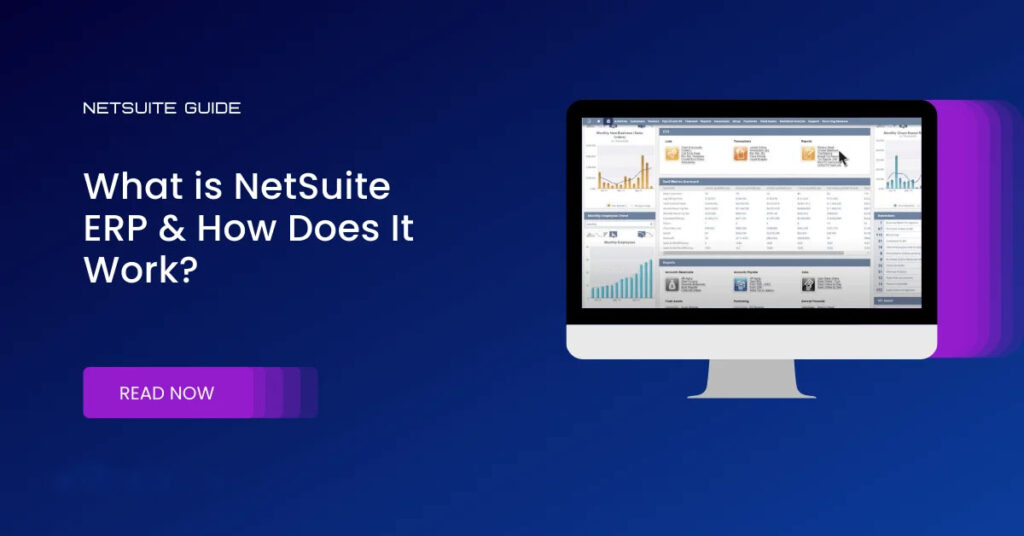
In today’s digital era, Enterprise Resource Planning (ERP) systems are pivotal in driving business efficiency and growth. Among the plethora of ERP solutions available, NetSuite ERP emerges as a comprehensive cloud-based platform tailored to meet diverse organizational needs. Developed by NetSuite Inc., a subsidiary of Oracle Corporation, NetSuite ERP integrates various business functions into a unified system, enabling organizations to optimize operations, enhance collaboration, and drive innovation. This article delves deeper into NetSuite ERP’s core functionalities, key features, benefits, and why it remains a preferred choice for businesses globally. Core Modules of NetSuite ERP Financial Management Accounting Excellence NetSuite ERP’s Financial Management module is designed to manage complex accounting tasks seamlessly: General Ledger: Provides a centralized repository for financial data, ensuring accuracy, consistency, and compliance with accounting standards. Accounts Payable and Receivable: Streamlines invoice processing, payment management, and cash flow monitoring, enhancing financial visibility and control. Fixed Assets Management: Facilitates asset tracking, depreciation calculations, and financial reporting, ensuring optimal asset utilization and compliance. Budgeting and Forecasting NetSuite ERP empowers organizations to create, monitor, and analyze budgets and forecasts, enabling proactive financial planning and decision-making. The system’s advanced analytics capabilities facilitate scenario planning, variance analysis, and predictive modeling, enabling organizations to anticipate market trends, mitigate risks, and capitalize on emerging opportunities effectively. Revenue Recognition NetSuite ERP automates revenue recognition processes, ensuring compliance with accounting standards such as ASC 606 and IFRS 15. By automating revenue allocation, deferral, and recognition, NetSuite ERP enhances financial transparency, reduces manual errors, and facilitates regulatory compliance, enabling organizations to maintain stakeholder trust and credibility. Supply Chain and Inventory Management Inventory Optimization NetSuite ERP’s Supply Chain and Inventory Management module offers real-time inventory visibility, demand forecasting, and optimization capabilities: Demand Forecasting: Leverages historical data, market trends, and predictive analytics to forecast demand accurately, enabling organizations to optimize inventory levels, reduce stockouts, and minimize carrying costs. Warehouse Management: Facilitates efficient warehouse operations, inventory tracking, and order fulfillment processes, enhancing operational efficiency and customer satisfaction. Order-to-Cash Cycle NetSuite ERP streamlines the order-to-cash cycle by integrating order management, fulfillment, and invoicing processes. By automating order processing, shipping, and billing, NetSuite ERP accelerates cash conversion cycles, improves order accuracy, and enhances customer satisfaction, enabling organizations to build lasting customer relationships and drive revenue growth. Procurement Excellence NetSuite ERP automates procurement processes, vendor management, and contract lifecycle management, enabling organizations to: Negotiate Better Terms: Facilitates strategic sourcing, supplier evaluation, and contract negotiations, enabling organizations to secure favorable terms, pricing, and service levels. Ensure Compliance: Streamlines procurement processes, ensures adherence to regulatory requirements, and mitigates risks associated with vendor relationships, contract management, and procurement operations. Human Capital Management (HCM) Employee Lifecycle Management NetSuite ERP’s HCM module offers a comprehensive suite of tools to manage the entire employee lifecycle: Recruitment and Onboarding: Facilitates candidate sourcing, applicant tracking, and onboarding processes, enabling organizations to attract, onboard, and retain top talent effectively. Performance Management: Automates performance evaluations, goal setting, and feedback processes, enabling organizations to align employee performance with organizational objectives and drive continuous improvement. Time and Attendance Tracking NetSuite ERP’s time and attendance tracking capabilities enable organizations to monitor employee productivity, optimize labor costs, and ensure compliance with labor laws and regulations. By automating timekeeping, attendance tracking, and payroll processing, NetSuite ERP enhances workforce management, payroll accuracy, and regulatory compliance, enabling organizations to minimize risks and maintain workforce productivity. Benefits Administration NetSuite ERP simplifies benefits administration processes, enabling organizations to manage employee benefits, track eligibility criteria, and ensure compliance with regulatory requirements. By automating benefits enrollment, eligibility verification, and reporting processes, NetSuite ERP enhances employee satisfaction, reduces administrative burden, and facilitates compliance with healthcare, retirement, and other benefits programs effectively. CRM and E-commerce Integration Customer Relationship Management NetSuite ERP integrates CRM functionalities to manage customer relationships, sales pipelines, and marketing campaigns effectively: Sales Force Automation: Facilitates lead management, opportunity tracking, and sales forecasting, enabling organizations to optimize sales processes, improve conversion rates, and drive revenue growth. Marketing Automation: Streamlines marketing campaigns, lead nurturing, and customer segmentation processes, enabling organizations to target the right audience, personalize messaging, and optimize marketing ROI effectively. E-commerce Capabilities NetSuite ERP’s e-commerce capabilities enable organizations to create online stores, manage product catalogs, and process online transactions seamlessly: E-commerce Platform: Offers a robust e-commerce platform with features such as product management, inventory synchronization, and customer order fulfillment, enabling organizations to expand their digital footprint, reach new customers, and drive online sales growth. Omnichannel Commerce: Facilitates omnichannel commerce by integrating online and offline sales channels, enabling organizations to provide a seamless customer experience, optimize inventory allocation, and maximize sales opportunities across various touchpoints effectively. Key Features of NetSuite ERP Cloud-based Platform NetSuite ERP’s cloud-based platform offers several advantages, including: Scalability: NetSuite ERP’s cloud-based architecture enables organizations to scale their operations seamlessly, accommodating growth without incurring significant infrastructure costs. Accessibility: NetSuite ERP’s cloud-based platform provides organizations with anytime, anywhere access to business data and applications, enabling employees to collaborate effectively and make informed decisions regardless of their location. Security and Compliance: NetSuite ERP’s cloud-based platform adheres to stringent security protocols and compliance standards, ensuring that organizations’ data remains secure, confidential, and compliant with regulatory requirements. Customization and Flexibility NetSuite ERP’s customizable features and flexible architecture enable organizations to tailor the system to their specific needs, including: Customized Workflows: NetSuite ERP allows organizations to customize workflows, automate business processes, and streamline operations according to their unique requirements. Integration Capabilities: NetSuite ERP’s robust integration capabilities enable organizations to integrate the system with third-party applications, legacy systems, and other business tools, ensuring seamless data exchange, workflow automation, and information sharing across the organization. Real-time Analytics and Reporting NetSuite ERP’s advanced analytics and reporting capabilities provide organizations with: Real-time Insights: NetSuite ERP’s real-time analytics enable organizations to monitor key performance indicators (KPIs), track business metrics, and identify trends and patterns in their operations. Predictive Analytics: NetSuite ERP’s predictive analytics capabilities enable organizations to forecast future trends, anticipate market changes, and proactively respond to emerging opportunities and threats. Customizable Dashboards and Reports: NetSuite ERP’s customizable dashboards and reports enable organizations to create personalized views of their
NetSuite Partners: Trusted Expertise for Business Growth
What Are NetSuite Partners? NetSuite partners are certified professionals and organizations specializing in the deployment and optimization of NetSuite ERP solutions. These partners offer tailored services, ensuring businesses maximize the platform’s potential. Whether you are just starting with NetSuite or looking to enhance its current usage, the expertise of a trusted NetSuite partner can provide the support and guidance needed to achieve success. Why Your Business Needs a NetSuite Partner Partnering with the right NetSuite provider is essential for businesses seeking seamless implementation, customization, and ongoing support. Here are the key reasons why: Streamlined Implementation: Certified NetSuite implementation partners reduce the complexity of setup and migration, minimizing operational disruptions. Customization for Specific Needs: NetSuite consultants specialize in customizing the platform to meet your unique business needs, ensuring the ERP system fits perfectly with your processes. Comprehensive Support: Reliable NetSuite support services offer ongoing assistance to resolve technical issues and ensure optimal performance of your ERP system. Access to Latest Features and Updates: NetSuite partners stay up-to-date with new features, helping your business maintain compliance and take advantage of the latest tools. Core Services Offered by NetSuite Partners NetSuite solution providers offer a range of critical services designed to ensure businesses optimize their use of NetSuite ERP. These include: NetSuite Implementation Services Certified NetSuite implementation partners provide end-to-end solutions, from initial setup to data migration and training. This ensures that businesses can adopt NetSuite quickly and efficiently, minimizing disruptions during the transition. NetSuite Customization NetSuite is highly customizable, and certified partners can tailor the system to your business’s specific needs. This includes modifying workflows, creating custom scripts, and developing personalized dashboards that help streamline operations and enhance user experience. NetSuite Integration Integrating NetSuite with other third-party systems such as Salesforce, Shopify, or custom applications can drive operational efficiency. NetSuite partners offer expert integration services that ensure seamless connectivity with external tools and data sources. Ongoing Support and Maintenance NetSuite support services are essential for addressing technical issues and ensuring continuous optimization. Certified NetSuite partners offer proactive maintenance, troubleshooting, and upgrades to keep your system running smoothly. Training and Development NetSuite partners provide comprehensive training programs that ensure your team is equipped to make the most of NetSuite’s capabilities. These training services empower businesses to operate the system effectively and maximize its full potential. Top NetSuite Partners to Consider Selecting a reliable NetSuite partner is crucial for ensuring the success of your ERP implementation. Here are some of the most reputable NetSuite solution providers in the industry: GSI Expertise: Implementation, performance tuning, and cloud solutions. Why Choose Them: GSI is known for offering seamless NetSuite transitions and integration, with a focus on cloud and enterprise solutions. Accenture Expertise: Enterprise-level NetSuite implementation and global consulting services. Why Choose Them: Accenture’s vast resources and expertise make them ideal for large-scale NetSuite implementations. SuiteCentric Expertise: Small to mid-sized businesses, specializing in eCommerce and retail solutions. Why Choose Them: SuiteCentric is known for providing personalized services tailored to growing businesses, particularly in the eCommerce sector. Protelo, Inc. Expertise: Real-time business support and NetSuite customization. Why Choose Them: Protelo focuses on proactive maintenance and rapid problem resolution, ensuring minimal disruption. NetSuite Alliance Partners Expertise: End-to-end solutions from implementation to support. Why Choose Them: As an official partner, they provide a wide array of services that cater to both small businesses and large enterprises. How to Choose the Right NetSuite Partner Choosing the best NetSuite partner requires careful consideration. Here are the key factors to keep in mind: Certification and Industry Expertise: Ensure that the NetSuite partner is certified and has extensive experience in your industry. Certification guarantees that the partner is qualified to implement and optimize NetSuite for your business. Proven Track Record: Review client testimonials and case studies to understand the partner’s ability to deliver results. A proven track record is often the best indicator of future success. Customization Capabilities: NetSuite is highly flexible, and your partner should have the expertise to customize the system to meet your specific requirements. Look for partners that understand the intricacies of your business processes. Support Services: Consider partners that offer comprehensive ongoing support to address technical issues quickly and minimize downtime. 5. Scalability: As your business grows, your NetSuite partner should be able to scale the solution accordingly. Ensure they can provide advanced features and solutions as your business evolves. The Key Benefits of Partnering with Certified NetSuite Experts Working with certified NetSuite experts offers several advantages: Faster Implementation: Experienced partners can streamline the deployment process, ensuring a faster transition to NetSuite and reducing system downtime. Cost Efficiency: A NetSuite partner can help you avoid costly mistakes during implementation, ensuring that you get the most out of your ERP system from the start. Industry-Specific Expertise: Many NetSuite partners specialize in specific industries, allowing them to provide tailored solutions that address the unique challenges of your business. Maximized ROI: With a NetSuite partner’s guidance, you can maximize the value of your NetSuite investment by aligning the system with your business goals and processes. Ongoing Support: NetSuite experts provide continuous support, helping you stay up to date with new features and ensuring your system runs smoothly over time. Conclusion: Empowering Your Business with NetSuite Partners NetSuite partners play a pivotal role in ensuring the successful implementation and optimization of NetSuite ERP systems. By choosing the right NetSuite partner, businesses can streamline their operations, enhance productivity, and unlock the full potential of their ERP investment. Whether you are looking for implementation, customization, or ongoing support, the right NetSuite partner will guide you toward achieving long-term business success.
Discover the Extensibility of AI in NetSuite: Harnessing AI for Daily Tasks and Overcoming Key Challenges
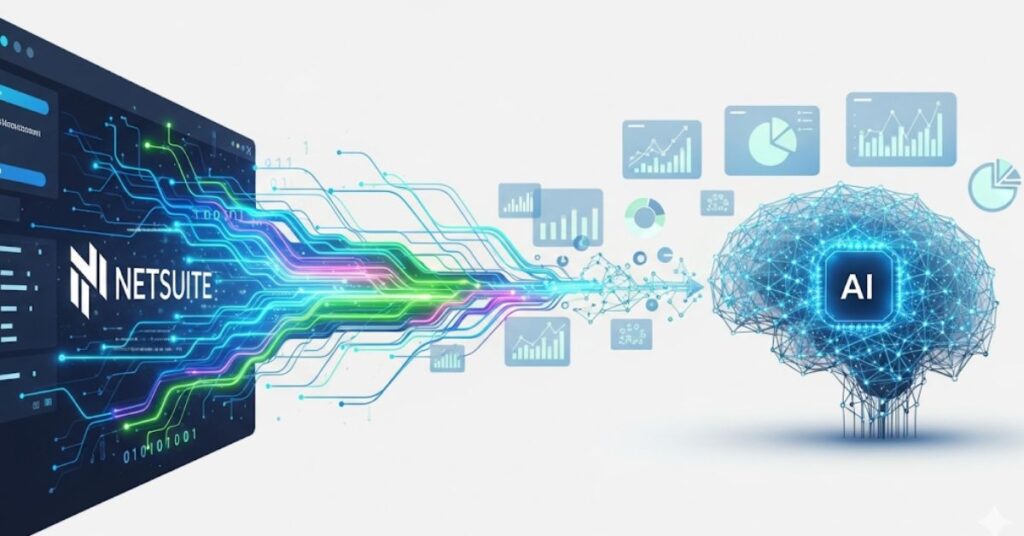
Expectations for accuracy, speed, and actionable insights in finance have never been higher. Traditional processes that rely on manual work often slow down reporting and increase the risk of error. Artificial intelligence, when paired with the power of NetSuite, changes this equation. On Tuesday, September 23, 2025, 10:00 – 10:30 a.m. PDT, Oracle NetSuite will host a product demonstration webinar titled “Discover the Extensibility of AI in NetSuite: See How to Harness AI for Daily Tasks and Key Challenges.” This session will show how AI seamlessly integrates with NetSuite data to automate processes, reduce errors, and deliver deeper insights. Why AI in NetSuite Matters Today Finance teams face growing pressure to deliver more insights in less time. AI provides the tools to meet these demands. 1- Intelligent automation: Reduces repetitive manual work and streamlines finance operations. 2- Error reduction: Detects anomalies early and improves data accuracy. 3- Faster reporting: AI-powered analysis cuts reporting time from days to minutes. 4- Strategic foresight: Predictive models allow proactive planning and better decisions. By embedding AI directly into NetSuite, organizations can move from reactive financial management to strategic business leadership. Key Takeaways from the Webinar This upcoming session will highlight practical AI applications within NetSuite and how they improve everyday workflows. 1- Automated data capture: AI will demonstrate how financial and transactional data can be entered with minimal human effort. 2- AI-driven narratives: The system will generate plain-language explanations and visuals directly from raw numbers. 3- Anomaly detection: NetSuite AI will flag unusual transactions, enabling faster resolution of issues. 4- Forecasting trends: Attendees will see how AI can project future performance, enabling data-driven strategy. These demonstrations will showcase AI not just as a concept but as a daily operational tool. Extensibility Through External AI Models One of the most powerful features of this session is showing how NetSuite connects to external AI models through the MCP (Model Connectivity Protocol). 1- Enhanced reporting: External AI adds depth to financial reporting, combining NetSuite data with advanced algorithms. 2- Custom insights: Businesses can tailor AI models for industry-specific needs and regulations. 3- Seamless integration: MCP ensures a secure, streamlined connection between NetSuite and AI platforms. 4- Scalable innovation: Companies can adopt new AI models as they emerge without rebuilding their systems. This extensibility future-proofs NetSuite for businesses seeking to innovate continuously. Challenges AI Helps Finance Teams Overcome The webinar will also address common financial challenges and how AI mitigates them. 1- Manual bottlenecks: Eliminating slow and error-prone manual processes through automation. 2- Data inconsistency: Ensuring accuracy by reconciling data in real time. 3- Limited visibility: Unlocking actionable insights from large, complex datasets. 4- Reactive decision-making: Transitioning from lagging reports to proactive, predictive planning. By directly tackling these challenges, NetSuite AI delivers measurable business value. Featured Speakers You Will Hear From Attendees will gain insights from Oracle NetSuite experts who bring both technical and strategic expertise. 1- Rebeca Bichachi, Product Marketing Director: Will provide an overview of AI’s role in transforming finance operations and NetSuite’s strategic vision. 2- Ben Bode, Solution Consultant: Will demonstrate how AI integrates with NetSuite’s workflows and showcase live examples of AI capabilities in action. Together, they will provide a comprehensive perspective on both the business and technical aspects of NetSuite AI. Why You Should Attend This Session Whether you are a CFO, controller, or member of a finance team, this webinar offers direct, practical value. 1- Hands-on demonstration: See real AI use cases within NetSuite. 2- Actionable insights: Learn practical ways to apply AI in daily financial workflows. 3- Future-readiness: Understand how NetSuite AI prepares you for tomorrow’s challenges. 4- SuiteWorld 2025 context: Get a preview of the themes and innovations likely to be discussed at Oracle’s flagship event. Attending this session ensures you stay ahead of peers in leveraging AI for financial management. Registration Details To attend the “Discover the Extensibility of AI in NetSuite” webinar: Date: Tuesday, September 23, 2025 Time: 10:00 – 10:30 a.m. PDT Format: Online product demonstration Participants are required to fill out a short registration form, providing basic details such as name, work email, company, and business type. Oracle will process this information in line with its privacy policy. Conclusion The upcoming webinar “Discover the Extensibility of AI in NetSuite: See How to Harness AI for Daily Tasks and Key Challenges” offers a clear look at how finance teams can leverage AI to achieve greater efficiency, accuracy, and insight. From automating data entry to forecasting trends and connecting with external AI models, the session will showcase practical applications with immediate impact. For businesses navigating complex markets, this demonstration highlights why AI in NetSuite is more than a technological upgrade, it is a competitive necessity. By attending, you gain the knowledge and tools to harness AI for smarter decision-making and operational excellence ahead of SuiteWorld 2025.
Streamline AR & AP in NetSuite: A Social Impact Workshop for Nonprofits

Nonprofit organisations operate under constant pressure of time, resources, and accountability. Every hour spent on manual data entry, delayed invoice approvals, or reconciling payments is an hour less devoted to mission-driven work. Recognising this, Suitepedia is proud to host the Social Impact Workshop: Streamlining Financial Data Entry for Nonprofits on Thursday, September 18, 2025, with a follow-up session on Thursday, September 25, 2025. This workshop teaches participants how to drive NetSuite AR AP automation for nonprofits. We show you how to accelerate accounts receivable (AR), simplify accounts payable (AP), reduce manual labour, improve financial visibility, and maintain high standards of governance. Why Automation Matters for Nonprofits Nonprofits face a unique combination of requirements: multiple funding sources (donations, grants), constraints on how funds can be used, tight audits, and often limited financial staff. In this context: Manual AR & AP workflows lead to delays, errors, and poor vendor/donor relationships. Without automated cash application in NetSuite, matching payments to invoices can take hours or days. Tools like Payment Link in NetSuite and Bank Payments can reduce friction in collecting revenue and paying bills. By investing time in learning automation, organisations can reassign labour to strategic work, improve compliance, and scale more sustainably. Workshop Overview: What You Will Learn In the two‐part workshop series, we cover: Core NetSuite functionality Memorized transactions and reminders: Automate recurring bills or invoices so your team doesn’t have to re-enter common entries. Role of reminders in AR & AP: Avoid overdue invoices (AR) or late payments (AP) that can harm cash flow or vendor trust. Advanced features & tools Payment Link: Let donors or customers pay invoices through secure, simple links. Streamline AR. Bank Payments: Automate vendor payments and reconcile bank statements more smoothly. Automated Cash Application: Match incoming payments to open receivables with minimal human intervention. Best practices, options & decision points Deciding between manual vs. automated workflows. Establishing internal controls and audit trails. Measuring the impact of automation on accuracy, speed, and resource allocation. Eligibility & Audience This webinar is open to eligible nonprofit NetSuite customers. The criteria include: Primary purpose is non-religious, non-political. No discrimination by race, gender etc. Not a government entity or public higher education institution. If your organisation meets these, you will benefit from learning how NetSuite AR AP automation for nonprofits can be tailored to your organisation’s financial needs. How NetSuite Supports AR & AP Automation NetSuite already has built strong foundations for nonprofit financial management. Some relevant features include (drawn from NetSuite’s financial management and nonprofit accounting materials): Accounts Payable automation: matching incoming invoices to purchase orders and delivery receipts, applying approvals, scheduling payments. Accounts Receivable automation: invoice creation, reminders, tracking payment status, dashboards that show ageing receivables. Fund accounting, grants tracking, dashboards, and real-time reporting for nonprofits, which helps tie revenue and expense to donor restrictions. The workshop will build on these to show how tools like Payment Link, Bank Payments, and Automated Cash Application plug in to reduce manual data entry. Top Benefits You Will Gain By attending, your nonprofit can expect: Time savings: less manual data entry, faster invoice and payment cycles. Reduced errors: automated matching reduces risk of duplicate or missing entries. Cash flow improvement: faster invoicing, timely payments, clearer understanding of incoming/outgoing cash. Stronger financial control and compliance: audit trails, reminders, internal approvals. Reallocation of resources: staff can focus on mission-centric activities instead of admin work. Examples & Use Cases A nonprofit using Automated Cash Application within NetSuite saw its AR reconciliation time drop by half, because incoming payments from donors and clients got matched automatically to open invoices. Another organisation implemented Payment Link for its recurring donor payments; this reduced delays in receivables and improved donor satisfaction. With Bank Payments, a nonprofit enabled vendor invoice payments to be scheduled and reconciled automatically, minimizing late fees and strengthening vendor relationships. What To Do Before the Workshop To get the most out of the sessions, we recommend nonprofits: Audit current AR & AP workflows. Note where manual steps exist. Identify recurring invoices and payments which might benefit from memorized transactions or reminders. Review your chart of accounts and fund accounting setup to ensure it aligns with your reporting and compliance needs. Prepare specific questions or pain points: for example, “How do I reduce days sales outstanding in my AR?” or “How do I reconcile bank payments faster?” Conclusion If your nonprofit is seeking to boost efficiency, reduce friction, and improve financial stewardship, this Social Impact Workshop offers a concrete, hands-on path to leveraging NetSuite AR AP automation for nonprofits. Don’t miss the chance to explore Payment Link, Bank Payments, Automated Cash Application, memorized transactions, and reminders. Register now to save time, reduce risk, and refocus your financial team on what matters most; your mission. First session: Thursday, September 18, 2025, 2:00-3:00 p.m. CDT Follow-up: Thursday, September 25, 2025, 2:00-3:00 p.m. CDT
Next-Gen NetSuite Integrations: Unlocking Seamless Connectivity with Third-Party Platforms Ahead of SuiteWorld 2025
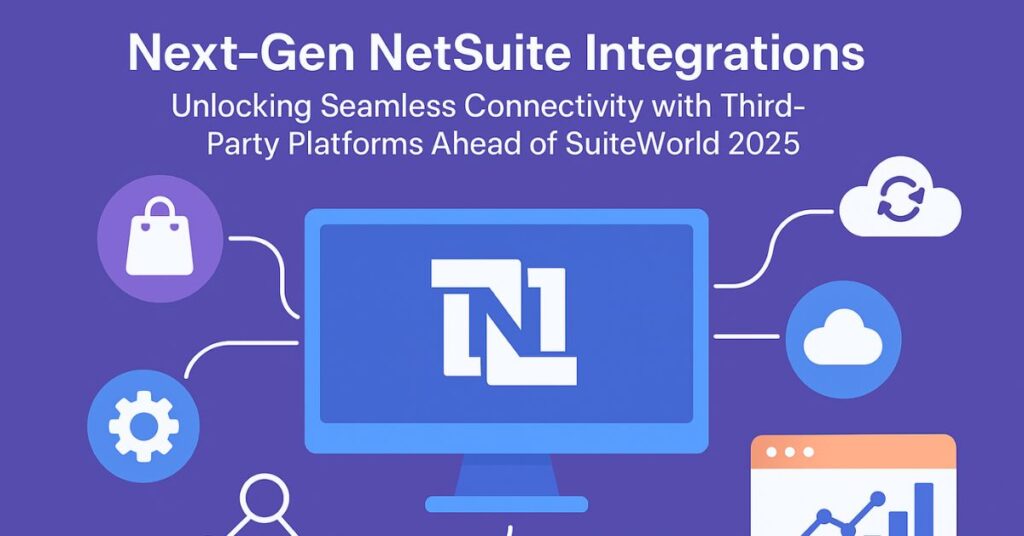
In today’s digital-first economy, businesses thrive when systems talk to each other. For many organizations, NetSuite serves as the central hub for managing financials, supply chain, CRM, and more. However, to realize its full potential, NetSuite must integrate seamlessly with third-party applications that power sales, marketing, logistics, payments, and customer engagement. Next-gen NetSuite integrations take this connectivity to the next level. They offer real-time synchronization, scalability, and flexibility while reducing the risks of data silos and manual processes. As SuiteWorld 2025 approaches, companies are looking to modernize integration strategies to unlock agility and efficiency. This blog explores how next-gen integrations reshape NetSuite’s ecosystem, the challenges they solve, and best practices for leveraging them. Why Next-Gen NetSuite Integrations Matter Legacy integrations often lack flexibility, are prone to errors, and cannot keep pace with modern business needs. By adopting advanced integration approaches, companies can achieve seamless connectivity across platforms. 1- Real-time data flow: Transactions update instantly across NetSuite and third-party systems, reducing delays. 2- Customer experience: Integrated tools provide a unified view of customers across sales, service, and finance. 3- Efficiency gains: Automated workflows replace manual data entry, saving time and minimizing errors. 4- Scalable operations: Next-gen integrations adapt easily as businesses grow and adopt new applications. These benefits ensure that businesses remain competitive and agile in a rapidly evolving market. Key Features of Next-Gen NetSuite Integrations Modern integration platforms and technologies redefine how NetSuite connects with other applications. 1- API-driven architecture: Robust APIs allow flexible, secure, and scalable connections with multiple systems. 2- Pre-built connectors: Ready-to-use integrations for platforms like Shopify, Salesforce, or Stripe accelerate deployment. 3- Event-driven automation: Triggers initiate workflows immediately when events occur in connected systems. 4- AI and machine learning: Intelligent integrations detect anomalies, optimize routing, and predict issues. By leveraging these features, companies can create a future-proof integration framework. Common Third-Party Platforms Integrated with NetSuite The value of NetSuite grows when it synchronizes with essential third-party tools across industries. 1- E-commerce platforms: Shopify, Magento, and WooCommerce sync product catalogs, orders, and inventory with NetSuite. 2- CRM systems: Salesforce and HubSpot integration align customer data with financial and operational insights. 3- Payment gateways: Stripe, PayPal, and Adyen ensure secure, automated payment reconciliation. 4- Logistics and 3PL providers: Integrations with FedEx, UPS, or ShipStation streamline fulfillment and shipping visibility. These integrations enable businesses to create connected ecosystems that reduce friction and drive growth. Challenges in Traditional NetSuite Integrations While integration is vital, businesses often encounter barriers when relying on outdated methods. 1- Data silos: Disconnected systems create inconsistencies that affect decision-making. 2- High maintenance: Custom-built integrations require constant updates and troubleshooting. 3- Limited scalability: Legacy systems struggle to keep up with rapid business expansion. 4- Security risks: Weak integration frameworks expose businesses to compliance and data breaches. Next-gen integration platforms address these pain points with robust, scalable, and secure solutions. How Next-Gen Integrations Improve Business Agility Agility is the ability to adapt quickly without compromising operations. NetSuite integrations provide this flexibility. 1- Faster decision-making: Real-time data visibility enables accurate forecasting and planning. 2- Seamless collaboration: Cross-departmental teams work from the same data sets, improving alignment. 3- Rapid scaling: Businesses can onboard new systems or expand into markets without disruption. 4- Operational resilience: Automated integrations minimize the risks of human error and downtime. By improving agility, companies gain the competitive edge needed in fast-changing industries. Best Practices for Implementing NetSuite Integrations To maximize the value of next-gen integrations, businesses should adopt proven practices. 1- Define integration goals: Identify whether the priority is cost savings, customer experience, or compliance. 2- Choose scalable tools: Invest in integration platforms that grow with your business. 3- Focus on data quality: Establish governance practices to ensure accurate and consistent data flow. 4- Test thoroughly: Conduct end-to-end testing before going live to prevent disruptions. These practices ensure smooth, secure, and high-performing integrations. Preparing for SuiteWorld 2025 with Next-Gen Integrations SuiteWorld 2025 will showcase the latest innovations in NetSuite technology, including advanced integration strategies. Businesses preparing for the event should focus on integration readiness. 1- Evaluate current integrations: Audit existing systems for gaps, inefficiencies, or risks. 2- Explore new solutions: Research next-gen integration providers that align with business goals. 3- Adopt automation early: Implement event-driven automation before SuiteWorld to showcase tangible results. 4- Engage in peer learning: Leverage SuiteWorld sessions to benchmark best practices and emerging trends. Preparation today ensures companies are well-positioned to take advantage of the insights revealed at SuiteWorld. Future Trends in NetSuite Integrations As technology evolves, NetSuite integrations will continue to expand in capability and scope. 1- AI-driven automation: Smarter workflows that optimize themselves over time. 2- Industry-specific integrations: Tailored solutions for healthcare, manufacturing, or financial services. 3- Hyperconnected ecosystems: Seamless collaboration across multiple ERP, CRM, and analytics platforms. 4- Cloud-native security: Advanced encryption and compliance features integrated by default. These trends highlight how next-gen NetSuite integrations will remain central to digital transformation. Conclusion The shift toward next-gen NetSuite integrations is more than a technology upgrade. It is a strategic move that empowers businesses to achieve seamless connectivity, reduce inefficiencies, and future-proof operations. By integrating NetSuite with third-party platforms, companies unlock real-time data, automation, and scalability that enhance productivity and customer satisfaction. As SuiteWorld 2025 approaches, organizations that embrace modern integration strategies will lead the way. By preparing today, businesses can showcase innovation, agility, and resilience on the SuiteWorld stage and beyond.
ERP Manufacturing Module: Digitizing the Shop Floor for Better Throughput
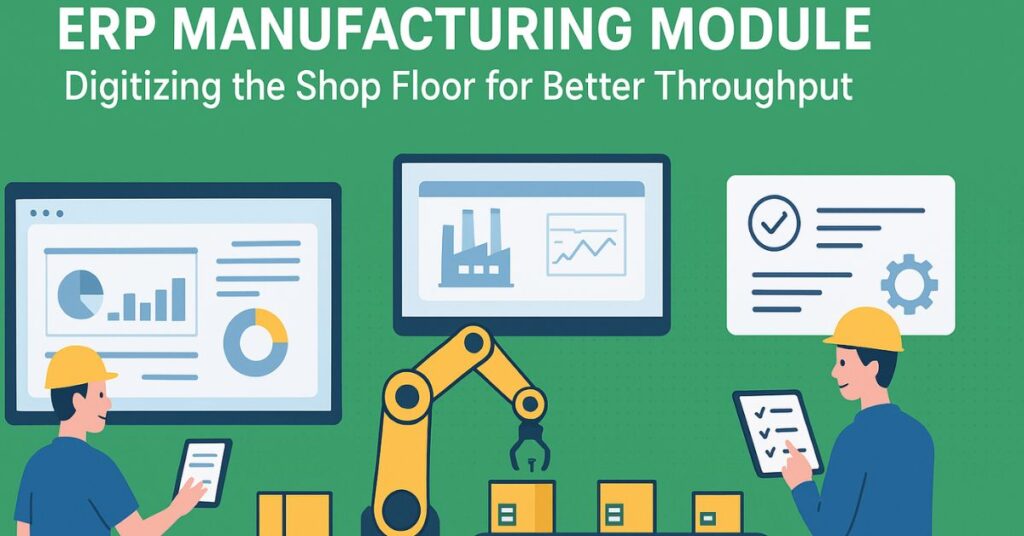
Manufacturers operate in a highly competitive market where speed, accuracy, and efficiency define success. Traditional shop floors often struggle with fragmented systems, manual processes, and limited visibility. These challenges directly affect throughput and productivity. The ERP manufacturing module addresses these problems by digitizing the shop floor. It integrates production planning, inventory, quality, and workforce management into a single platform. This digitization enables companies to track operations in real time, reduce downtime, and optimize throughput. In this blog, we explore how ERP transforms shop floor operations and drives manufacturing excellence. Why Digitizing the Shop Floor Matters Modern manufacturing depends on accurate data and seamless coordination. Manual shop floor processes cannot deliver the visibility and agility required today. 1- Improved transparency: A digitized shop floor ensures managers track every order, material, and machine in real time. 2- Faster problem resolution: When bottlenecks occur, ERP alerts teams instantly so they can act quickly. 3- Increased throughput: Automated scheduling and data-driven resource allocation eliminate idle time. 4- Better workforce productivity: Operators receive clear instructions, reducing errors and boosting efficiency. Digitization through the ERP manufacturing module gives companies the control they need to balance costs, quality, and speed effectively. Core Features of the ERP Manufacturing Module The ERP manufacturing module is designed to centralize and streamline shop floor operations. Its features ensure a connected, data-driven environment. 1- Work order management: Automates creation, scheduling, and tracking of production orders, reducing paperwork. 2- Real-time machine monitoring: Integrates with IoT devices to track uptime, downtime, and machine performance. 3- Inventory synchronization: Links raw material consumption and finished goods reporting to inventory levels. 4- Quality management: Embeds quality checks into workflows, reducing rework and waste. Together, these features enable manufacturers to digitize the shop floor for better throughput and sustained competitiveness. Optimizing Throughput with ERP Tools Throughput measures how efficiently a factory converts raw materials into finished goods. ERP modules directly impact this metric. 1- Finite capacity scheduling: Plans production based on realistic machine and labor availability. 2- Bottleneck identification: ERP highlights slow processes that affect the entire production flow. 3- Automated routing: Directs jobs to the right machine or workstation, reducing delays. 4- Performance dashboards: Provides managers with live metrics on throughput, scrap, and cycle times. With these tools, the ERP manufacturing module helps factories improve throughput without compromising quality. Reducing Downtime Through Digitization Downtime is one of the biggest barriers to manufacturing efficiency. ERP systems help minimize both planned and unplanned downtime. 1- Predictive maintenance: Sensors feed data into ERP, allowing preventive maintenance before breakdowns occur. 2- Maintenance scheduling: Aligns machine servicing with low-demand periods to avoid production disruption. 3- Resource readiness: Ensures spare parts, tools, and technicians are available for repairs. 4- Downtime reporting: Tracks causes of downtime, enabling teams to prevent repeat issues. By digitizing the shop floor with ERP, manufacturers move from reactive to proactive maintenance, directly improving equipment utilization. Workforce Empowerment with ERP The workforce plays a vital role in ensuring efficiency. ERP provides operators, supervisors, and managers with tools to perform better. 1- Role-based dashboards: Operators view their tasks, while managers access shop-wide performance data. 2- Digital instructions: Work orders include clear, step-by-step instructions, reducing errors. 3- Mobile access: Employees can access ERP data on handheld devices, increasing flexibility. 4- Performance monitoring: Tracks operator productivity, enabling targeted training and support. Empowering the workforce with ERP manufacturing module tools ensures better alignment and higher productivity across the shop floor. Data Accuracy and Real-Time Visibility Accurate and timely data is the backbone of manufacturing efficiency. The ERP manufacturing module ensures this across operations. 1- Centralized data: Integrates production, inventory, and financial data into one system. 2- Real-time updates: Provides immediate insights into material consumption, work progress, and order status. 3- Error reduction: Minimizes manual entry by automating data capture from machines and operators. 4- Compliance reporting: Ensures accurate records for audits and regulatory requirements. With clean, reliable data, decision-makers can optimize throughput and eliminate inefficiencies. Scaling Production with ERP Growth in demand or expansion into new markets requires scalable systems. The ERP manufacturing module enables manufacturers to handle complexity. 1- Multi-plant support: Manages operations across multiple factories from a single system. 2- Flexible production models: Supports make-to-order, make-to-stock, and hybrid approaches. 3- Advanced analytics: Uses historical and predictive data to forecast production requirements. 4- Global compliance: Ensures standardized reporting across international locations. ERP gives companies the agility to scale production while maintaining high throughput and low costs. Best Practices for Implementing ERP on the Shop Floor To maximize value, manufacturers should follow proven best practices when adopting ERP for shop floor digitization. 1- Define clear objectives: Focus on goals like throughput improvement, downtime reduction, or data accuracy. 2- Engage shop floor teams: Involve operators and supervisors in planning and testing phases. 3- Invest in training: Provide hands-on ERP training to improve adoption and confidence. 4- Start small and scale: Pilot ERP in one line or plant before rolling it out company-wide. These practices ensure that ERP implementation for manufacturing modules delivers long-term results. Conclusion The ERP manufacturing module is more than a back-office tool. It digitizes the shop floor, enabling manufacturers to improve throughput, reduce downtime, and empower their workforce. By providing real-time visibility, predictive maintenance, and scalable tools, ERP creates a connected and efficient factory environment. Manufacturers that embrace ERP not only gain immediate operational improvements but also position themselves for long-term growth. In a competitive market, digitizing the shop floor with ERP is no longer optional, it is a strategic necessity for efficiency and profitability.
Why Small Businesses Choose NetSuite?
Imagine starting a small business, fuelled by passion and vision, only to be bogged down by operational complexities. That’s precisely where I found myself a few years ago. In the bustling realm of entrepreneurship, finding the right tools to streamline operations is crucial. Enter NetSuite—a game-changer for countless small businesses, including mine. The All-Too-Familiar Struggle: Anecdotes from the Trenches The Need for Customization I recall spending endless nights juggling spreadsheets, attempting to manage inventory, sales, and customer data manually. One misstep, and the entire system would collapse like a house of cards. Sound familiar? If you’ve been there, you know the sheer frustration and inefficiency that come with outdated systems. The Customer Service Conundrum Picture this: A disgruntled customer calls in, but you can’t access their order history or resolve their issue promptly. I’ve been there, stuck in a maze of disparate systems that hindered rather than helped. Customer loyalty hangs by a thread, and time is of the essence. The NetSuite Revelation: A Comprehensive Solution for Small Business Streamlined Operations: The End of Spreadsheet Sorrows NetSuite emerged as a beacon of hope, offering an integrated platform to manage finances, CRM, e-commerce, and more. No more sleepless nights wrestling with spreadsheets! With real-time data at my fingertips, I could make informed decisions and steer the business toward growth. Customer-Centric Approach: Building Trust and Loyalty NetSuite’s robust CRM capabilities transformed our customer service landscape. Now, when a customer reaches out, we have a 360-degree view of their interactions, preferences, and purchase history. This personalized touch fosters trust, loyalty, and repeat business—essential ingredients for sustainable growth. Why NetSuite Stands Out: Key Features and Benefits Scalability: Grow Without Limits As my business expanded, so did its needs. NetSuite’s scalable architecture effortlessly accommodated growth, from adding new users to integrating third-party applications. It’s like having a Swiss Army knife for small businesses—versatile, reliable, and always ready for action. Customization: Tailored Solutions for Unique Needs One size doesn’t fit all, especially in the dynamic world of small business. NetSuite’s customizable features allowed me to tailor the platform to my specific requirements, ensuring a seamless fit and maximizing efficiency. Cost-Effectiveness: Investing Wisely for Future Success While some solutions come with hefty price tags and hidden costs, NetSuite offers a cost-effective approach for small businesses. From reducing operational expenses to boosting productivity, the ROI speaks volumes. Real-Life Success Stories: Inspiring Tales of Transformation Case Study 1: Streamlining Inventory Management A fellow entrepreneur shared their success story of using NetSuite to streamline inventory management. What once was a logistical nightmare transformed into a well-oiled machine, optimizing stock levels, reducing wastage, and enhancing profitability. Case Study 2: Elevating Customer Experience Another inspiring tale highlighted how NetSuite’s CRM capabilities revolutionized customer experience. By personalizing interactions, resolving issues promptly, and fostering long-term relationships, businesses unlocked unprecedented growth and customer satisfaction. Embracing the NetSuite Advantage As I reflect on my journey and those of fellow entrepreneurs, one thing becomes abundantly clear: NetSuite is more than a software solution—it’s a catalyst for transformation. From overcoming operational challenges to fuelling growth and fostering customer loyalty, NetSuite empowers small businesses to thrive in a competitive landscape. So, if you find yourself navigating the complexities of entrepreneurship, pondering the next steps for your small business, consider embracing the NetSuite advantage. It’s not just about choosing a software solution; it’s about investing in a brighter, more prosperous future—one where efficiency, growth, and success go hand in hand. Take the leap of faith, explore the possibilities, and join the ranks of small businesses reaping the rewards of choosing NetSuite. Your journey toward operational excellence, customer satisfaction, and sustainable growth starts here. Trust me; it’s worth every step. Embrace the NetSuite advantage and redefine success on your terms. After all, you deserve nothing less than the best for your small business. Here’s to efficiency, growth, and prosperity—today, tomorrow, and beyond!
Oracle vs NetSuite
Oracle vs NetSuite Are Oracle and NetSuite the Same? In 1977, Ed Oates, Bob Miner, and Larry Ellison founded Oracle Corporation. The company leads the world in cloud-architected systems, enterprise software solutions, and database technology. Oracle has expanded its holdings through a series of acquisitions throughout the years, the most notable of which was the 2016 acquisition of NetSuite. Oracle NetSuite, formerly known as NetSuite, is a cloud-based corporate management suite that consists of ERP, CRM, financials, and e-commerce apps. Despite having different goals and target markets, Oracle vs NetSuite are owned by the same company. This blog looks at NetSuite and Oracle’s features and similarities. What is Oracle? The Oracle Corporation is well-known for providing a wide range of cloud computing solutions and enterprise software products. It is widely recognized for the Oracle Database software, a dependable and robust database management system that is utilized by companies all over the world. In addition to databases, Oracle offers a wide range of other products. These include the Oracle E-Business Suite, an integrated suite of business applications for automating various enterprise operations, and Oracle Cloud Infrastructure (OCI), which offers a variety of cloud computing services, including Oracle Fusion Middleware. In the technology industry, Oracle is a well-known brand. Its innovations in machine learning, artificial intelligence, and cloud computing have made it possible for it to satisfy a wide range of business needs. What is NetSuite? Among the earliest companies to provide business software over the Internet was NetSuite, which was established in 1998. When Oracle paid $9.3 billion for NetSuite in 2016, the business solidified its place in the cloud strategy. NetSuite is a comprehensive business management suite that includes ERP (Enterprise Resource Planning), financial administration, CRM (Customer Relationship administration), and e-commerce features. By streamlining complex processes and offering immediate performance data, it seeks to improve corporate operations. NetSuite is a wonderful alternative for growing enterprises because of its cloud-based architecture, which enables easy scaling. Through Oracle’s help, NetSuite has expanded its capabilities and is now able to use Oracle’s cloud architecture and technical breakthroughs to provide its clients with services that are ever more durable and reliable. Oracle vs NetSuite Despite having a business partnership, Oracle and NetSuite serve different purposes. Oracle offers a wide range of products with numerous options to satisfy various business needs. Here are a few difference: 1. Audience: Oracle: Mainly serving large corporations and government organizations, it offers sophisticated IT infrastructure services. Its products are made for companies that require safe, scalable, and dependable solutions. NetSuite: Concentrates on small- to medium-sized businesses and startups. It offers a more straightforward, approachable approach to corporate management, focusing on quick adoption and user-friendliness. 2. Products available: Oracle: Oracle provides a broad products including database, cloud service and ERPs. Its solution are designed to meet the scalable needs of organisations. NetSuite: NetSuite offers an integrated suite of cloud based applications. NetSuite is one of the products of Oracle only and is designed to streamline business task. 3. Integration: Oracle: Its products are highly customizable and may be tailored to meet the unique needs of large enterprises. Its integration features facilitate seamless connections to other enterprise systems and third-party apps. NetSuite: NetSuite has the advantage of having an integrated suite of applications pre-installed, but being equally highly customisable. This is a great option for businesses looking for a unified solution because it requires less intricate custom development and integration. 4. Scalability Oracle: This corporation is well-known for its on-premises and cloud-based solutions, and it provides deployment flexibility. Its cloud architecture provides a wide range of services that support complex workloads and large-scale operations (OCI). NetSuite: The full cloud-based design of NetSuite contributes to its scalability and rapid implementation. Because of its cloud-native architecture, businesses can grow without incurring significant IT infrastructure costs. NetSuite and Oracle are part of the same business family, yet they cater to different market segments. Oracle offers a broad range of corporate solutions, from databases to cloud services, to meet a variety of business needs, particularly those of large enterprises. On the other hand, NetSuite focuses on providing a comprehensive suite of cloud-based business management solutions, which makes it particularly suitable for growing businesses wishing to optimize their workflow. When combined, they provide extensive resources to meet the evolving demands of global businesses. This potent combo is the result of the technological prowess of Oracle and the specific cloud-based solutions offered by NetSuite. Disclaimer: The logos used on this website are the property of their respective owners. These logos are provided for informational purposes and to represent the entities or organizations mentioned in the content. Their inclusion does not imply any affiliation or endorsement unless specifically stated.We make no claim of ownership to the logos nor do we assert any right over them. Any use of third-party logos is purely for illustrative purposes. If you are a representative of the entity whose logo appears and wish for it to be removed, please contact us directly and we will promptly comply with your request.