As businesses grow, their infrastructure requirements expand. Transaction volumes increase, more users rely on systems for daily tasks, and peak demand seasons can create bottlenecks that affect performance. Without the right infrastructure alignment, companies risk inefficiencies, downtime, and slow response times. To address this challenge, Oracle NetSuite offers flexible Service Tiers designed to match the pace of business growth.
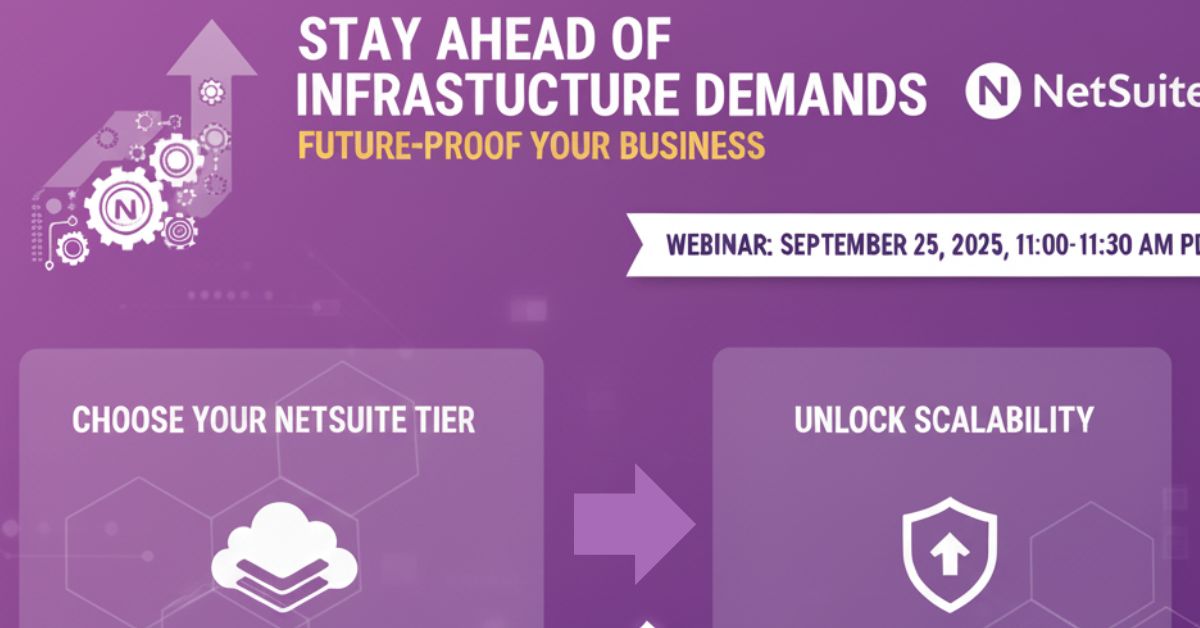
On Thursday, September 25, 2025, from 11:00–11:30 a.m. PDT, Oracle NetSuite will host a virtual event titled Stay Ahead of Your Infrastructure Demands as You Grow: Future-Proof Your Business with the Optimal NetSuite Service Tier. This session will help business leaders understand how choosing the right Service Tier reduces operational risks and supports long-term scalability.
Table of Contents
ToggleWhy Infrastructure Capacity Matters for Growing Businesses
Every growing business faces a tipping point where infrastructure limitations start to create friction. From delayed transaction processing to difficulties scaling operations, underestimating capacity needs can directly affect performance.
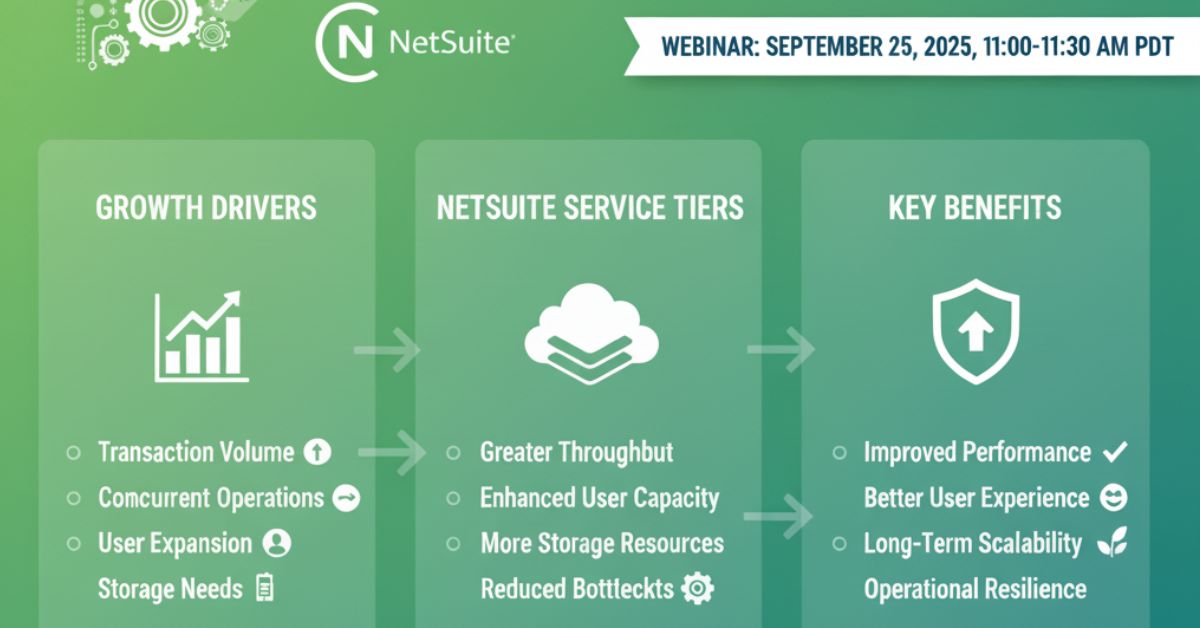
- Transaction Volume Growth: As businesses expand, daily transactions multiply, requiring higher system throughput.
- Concurrent Operations: Multiple departments rely on NetSuite simultaneously, increasing pressure on system capacity.
- User Expansion: Growth often brings more employees, partners, and vendors onto the system, adding complexity.
- Storage Needs: The volume of financial, operational, and customer data increases, requiring additional secure storage.
Choosing the right NetSuite Service Tier allows organizations to plan for these demands before they cause bottlenecks.
Understanding NetSuite Service Tiers
NetSuite Service Tiers provide businesses with different levels of infrastructure capacity. Aligning with the right tier ensures performance does not decline as user and transaction volumes grow.
- Greater Transaction Throughput Capacity: Businesses in high-growth sectors can process larger volumes of transactions seamlessly.
- Support for Concurrent Operations: The right tier supports more departments and workflows running at the same time.
- Enhanced User Capacity: Expanding organizations can onboard new users without compromising performance.
- Additional Storage Resources: Larger data volumes are accommodated with expanded storage availability.
By selecting the appropriate NetSuite Service Tier, companies reduce operational risks and future-proof their infrastructure.
Key Benefits of Scaling with NetSuite Service Tiers
Aligning with the optimal service level provides tangible advantages for scaling businesses.
- Improved System Performance: Operations remain smooth even during peak demand.
- Reduced Bottlenecks: Higher throughput minimizes delays in transaction-heavy environments.
- Better User Experience: Employees across finance, operations, and sales benefit from faster, more reliable access.
- Long-Term Scalability: Organizations can grow confidently knowing infrastructure can expand with them.
These benefits make Service Tiers a strategic decision for companies preparing for the next phase of growth.
Practical Scenarios Where Service Tiers Matter
Real-world examples highlight why scaling infrastructure proactively is essential:
- Retailers During Peak Seasons: Businesses in retail or e-commerce see transaction spikes during holidays. Service Tiers prevent slowdowns that affect customer experience.
- Global Expansion: Companies expanding into new markets need to support more users and operations across time zones.
- Data-Heavy Industries: Manufacturing, finance, and healthcare generate large volumes of data requiring robust storage capacity.
- High-Growth Startups: Scaling startups rely on fast systems to maintain momentum and meet investor expectations.
In each case, aligning with the right NetSuite Service Tier ensures infrastructure matches operational needs.
Why Attend the Webinar
This virtual event will help attendees assess their current infrastructure and prepare for future growth with the right service tier.
Key takeaways include:
- Understanding NetSuite Service Tiers and how they support scalability.
- Learning how to increase transaction throughput during high-demand periods.
- Exploring options for supporting more users and concurrent operations.
- Discovering how additional storage capacity safeguards performance as data grows.
Participants will leave with practical insights to future-proof their NetSuite investment.
Featured Speakers
The session will feature experts from Oracle NetSuite with deep knowledge of cloud infrastructure and service scalability:
- Joseph Clancey
Product Marketing Senior Analyst, Oracle NetSuite - Franz Bazar
Principal Cloud Technologist – TCOE, Oracle NetSuite
Their combined expertise will provide both technical and practical perspectives on optimizing infrastructure capacity.
Future-Proofing Your NetSuite Investment
One of the biggest risks in scaling a business is waiting too long to upgrade infrastructure capacity. When system limitations appear, they can slow down transactions, reduce productivity, and even impact customer experience. By aligning with the appropriate NetSuite Service Tier, companies mitigate these risks.
Future-proofing is not about over-investing. It is about proactively choosing a service level that matches expected growth, ensuring infrastructure supports strategy rather than holding it back. Businesses that adopt this mindset build resilience and agility for long-term success.
Conclusion
As businesses scale, infrastructure becomes a critical factor in operational performance and growth. Delays, bottlenecks, and system slowdowns are not just IT challenges, they directly affect revenue, customer experience, and competitiveness. The NetSuite Service Tier framework provides a structured way to align capacity with growth needs, ensuring organizations stay ahead of demand.